
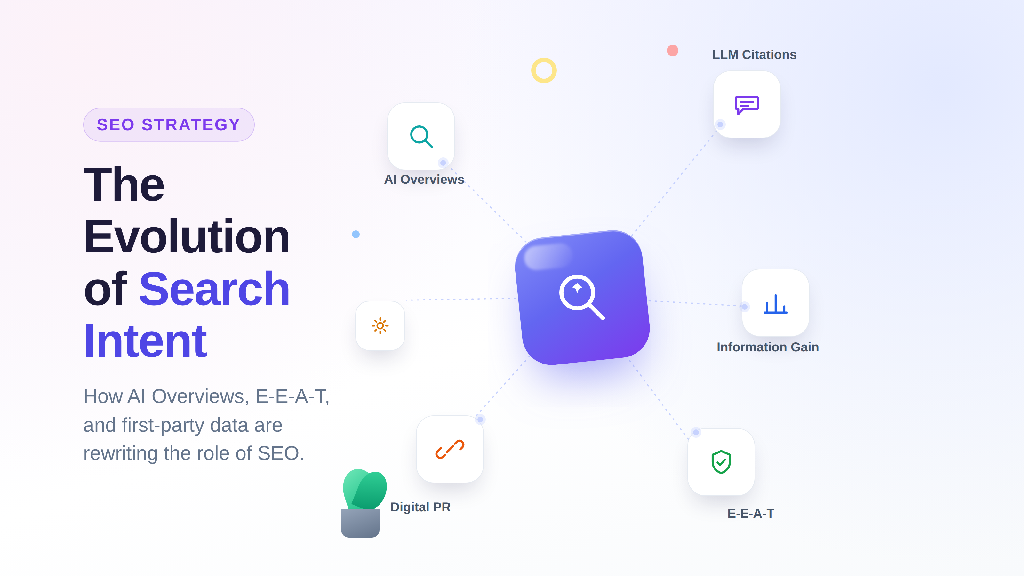
The Evolution of Intent and the Role of SEO in 2026
For years, the death of Search Engine Optimization (SEO) has been predicted by skeptics. Yet, as we navigate 2026, SEO has not died; it has undergone its most profound evolution yet. The traditional formula of finding a high volume keyword, writing a boilerplate article, and building a handful of exact match backlinks is no longer enough.
The rise of search engine integrated artificial intelligence, conversational query models, and highly sophisticated spam filters has fundamentally shifted how people find information online. If you are trying to drive organic growth today, you have to ask a fundamental question: what is the actual role of SEO in 2026? The answer lies in moving away from gaming search algorithms and moving toward optimizing for the entire digital ecosystem.
Optimizing for the Answer Engine: AI Overviews and LLMs
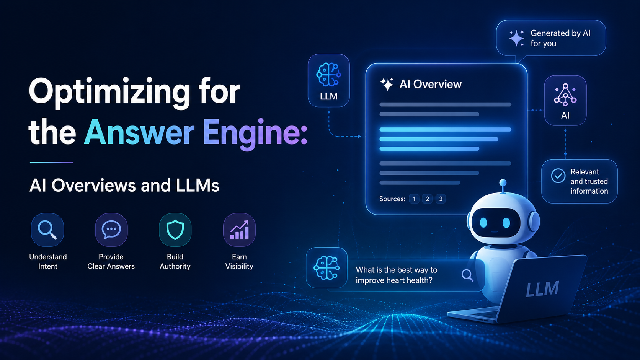
The most visible change in the search landscape is the dominance of AI Overviews and standalone search assistants like Perplexity and ChatGPT.
Today, a significant portion of informational search queries are resolved directly on the Search Engine Results Page (SERP) or within a chat interface. This means SEO is no longer just about optimizing for raw clicks; it is about optimizing for synthesized citations. When an AI engine pulls information to answer a user’s prompt, it relies on websites that present clear, structured, and authoritative data.
Because AI models extract and synthesize information from top ranking pages, your content structure must adapt. In 2026, high performing content uses the inverted pyramid structure in its digital formatting. Authors must give the absolute, clear answer to the query in the first 100 to 150 words of the post.
This approach makes it incredibly easy for Large Language Models (LLMs) to parse, understand, and cite the page. Once the direct answer is established, writers can follow up with the structural deep context, providing the rich, detailed information that a human reader will scroll down to consume.
Furthermore, if a blog post merely summarizes the top five results already ranking on Google, search engines will bypass it entirely. Google’s algorithms now prioritize Information Gain, which rewards content that introduces new, unique perspectives, proprietary data, or hands on case studies. The goal is no longer to repeat what the internet already knows, but to contribute something entirely original to the global index.
E-E-A-T Is No Longer Optional, It Is Algorithmic
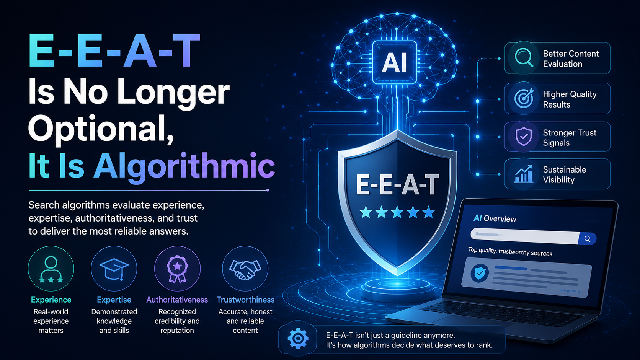
Google’s Quality Rater Guidelines have long emphasized E-E-A-T, which stands for Experience, Expertise, Authoritativeness, and Trustworthiness. In 2026, these are no longer just qualitative guidelines for human raters; they are deeply integrated into Google’s core ranking systems.
As generative AI makes it incredibly cheap and fast to produce mediocre content, the web has been flooded with generic text. To stand out, search engines look for undeniable signals of true human expertise.
Demonstrating experience requires a shift toward first person narratives. Writers need to share hands on, real world anecdotes, unique screenshots, or video proof of them actually doing the work they are describing. Expertise must be backed up technically by linking content to verified author profiles that boast robust digital footprints, schema markup, and external credentials.
Building authoritativeness requires a hyper focused strategy. Instead of writing broadly about an entire industry, brands must build concentrated topical clusters, writing deeply about narrow niches to establish undeniable authority.
Finally, trustworthiness must be maintained by meticulously citing sources, linking to high authority peer reviewed data, and keeping the website transparent with clear contact pages, privacy policies, and editorial guidelines. If an AI can write your exact article without access to your unique company data or personal experience, that content will struggle to rank in 2026.
The Death of the Cookie and the Rise of First-Party Data
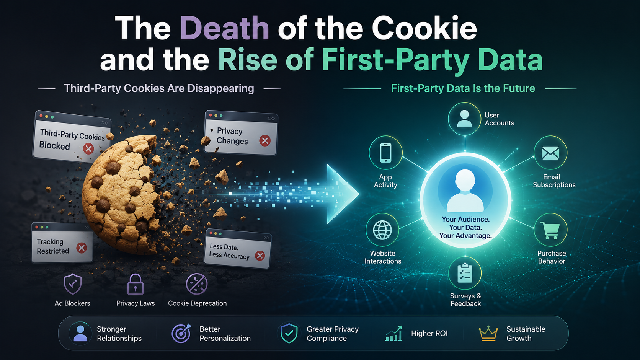
With privacy regulations tightening globally and the technical deprecation of third party tracking cookies, paid advertising has become significantly more expensive and less targeted. In this restrictive landscape, the role of SEO has shifted from a mere traffic driver to a critical infrastructure for capturing first party data. Organizations can no longer afford to view organic traffic as a vanity metric.
SEO in 2026 works hand in hand with conversion rate optimization and email marketing. The goal of attracting organic visitor traffic is no longer just to get a brief pageview; it is to exchange valuable, high intent editorial content for an email address, a newsletter subscription, or a community sign up. Once you capture that organic visitor and bring them into your ecosystem, you own the relationship entirely. This strategy frees your business from the ongoing volatility of ad networks and algorithm updates.
Technical SEO Is Now About UX and Accessibility
Technical SEO used to be primarily about indexing tricks, robots.txt files, and XML sitemaps. While crawlability remains foundational to digital visibility, technical SEO in 2026 is heavily focused on user experience and accessibility.
Google’s Core Web Vitals have become highly sophisticated, and search engines understand that a slow, poorly designed website frustrates users. If a user clicks your link, waits four seconds for it to load, gets frustrated by a shifting layout, and bounces back to the search results, your rankings will inevitably drop.
Mobile first design is paramount, as mobile devices drive the vast majority of global searches, meaning your site must render flawlessly and instantly on any screen size. Developers must also utilize semantic HTML and advanced JSON-LD schema markup to help search engine crawlers understand the relationships between different entities, such as authors, products, organizations, and reviews.
Lastly, a clean, logical internal linking structure helps search bots crawl your site efficiently, ensuring your most valuable pages receive the proper internal equity they deserve.
From Link Building to Digital PR and Brand Authority
The old school link building tactics of buying spammy directory links, participating in automated link exchanges, or posting on private blog networks are entirely obsolete. Google’s automated filtering systems easily spot and devalue manipulative link profiles. In 2026, successful link building is indistinguishable from high level Digital PR.
To earn high quality, editorially given backlinks that actually move the needle, you must create genuine linkable assets. This involves conducting industry specific surveys and publishing original data reports, which naturally compels journalists and bloggers to link to your site as a primary source.
It also requires contributing genuinely insightful thought leadership pieces to authoritative, editorially managed publications within your niche. Creating free interactive calculators, templates, or widgets that other sites in your industry want to recommend to their readers is another highly effective way to naturally build a powerful backlink profile.
Conclusion: The New Mandate for SEOs
The role of SEO in 2026 is no longer about trying to trick a search engine or reverse engineer an algorithm. It is about understanding the user’s intent deeper than anyone else and delivering the absolute best, most frictionless answer possible. Instead of asking how to rank for a specific keyword, modern marketers must ask what the user is trying to accomplish and how they can help them do it fastest.
They must identify what unique data, experience, or insight they can bring to a topic that an AI model cannot invent, while ensuring their website is fast, secure, and delightful to navigate. By focusing on authentic value, human experience, and flawless user experience, you ensure that your brand remains visible, trusted, and authoritative, no matter how much the search engines continue to change.