
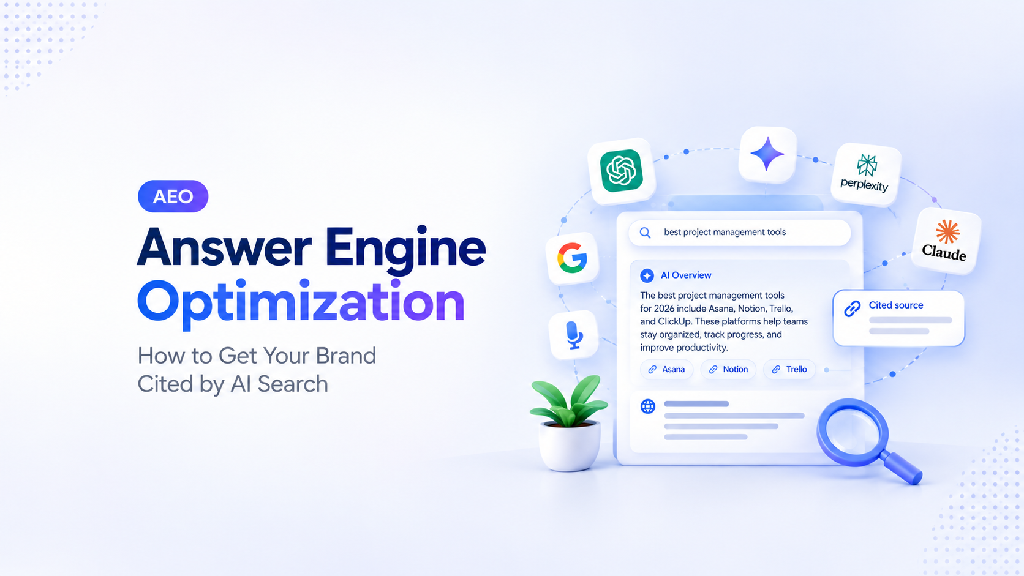
Answer Engine Optimization: How to Get Your Brand Cited by AI Search
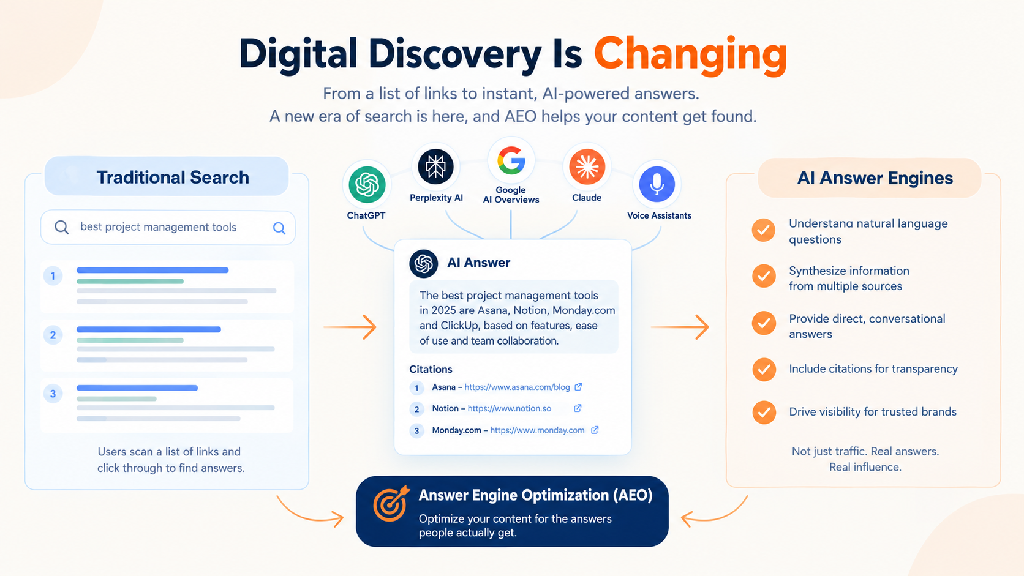
Digital discovery is undergoing its most profound shift since the invention of the search box. For over two decades, search engine optimization meant structuring web pages to win high rankings on a list of blue links, encouraging users to click through to your domain.
Today, user behavior is fundamentally changing. Instead of typing fragmented keywords, searchers ask complete questions and expect immediate, synthesized responses. Platforms like ChatGPT, Perplexity AI, Google AI Overviews, Claude, and voice assistants no longer serve as mere traffic directories. They operate as direct knowledge engines.
To maintain digital visibility and brand authority in an AI-first ecosystem, businesses must adapt their content strategies. This transition has given rise to Answer Engine Optimization (AEO).
In this guest post, we explore what AEO is, trace where the concept originated, analyze how answer engines operate differently from traditional search engines, examine what changes for your business strategy, explain how Large Language Model citations work, and provide an actionable starting checklist to optimize your content.
1. Definition and Origins: Where Did AEO Come From?
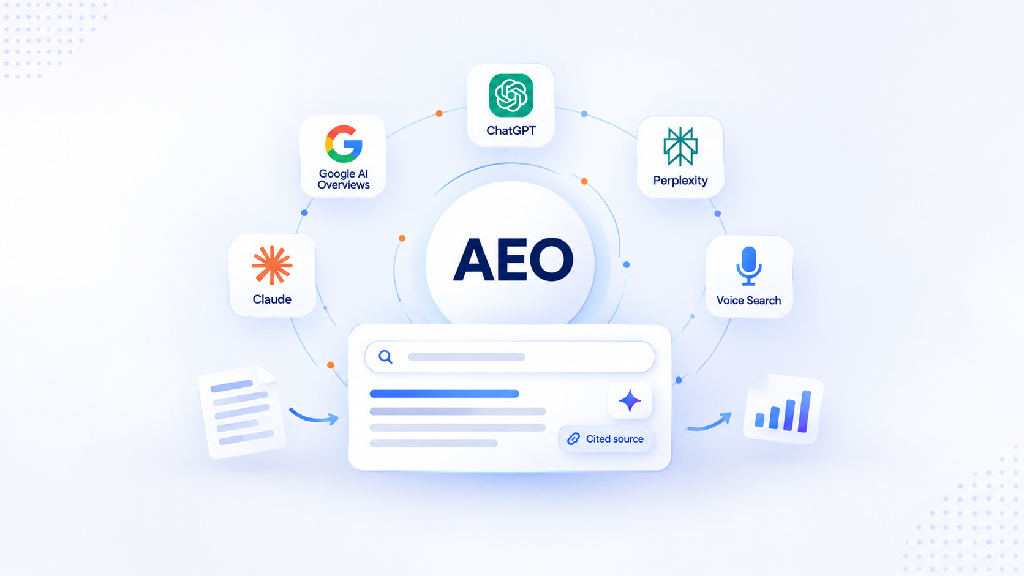
Answer Engine Optimization (AEO) is the practice of structuring, writing, and technically formatting online content so that artificial intelligence tools, large language models, and direct-answer algorithms can easily parse, comprehend, and synthesize your information into definitive answers for users. While traditional SEO focuses on maximizing web page rankings and driving organic clicks, AEO aims to establish your content as the underlying source of truth referenced inside AI-generated summaries and conversational interface responses.
The term itself evolved across multiple distinct phases of digital search history:
a. The Early Voice Search Era (2015-2018): Digital marketers first coined AEO during the rapid adoption of voice assistants like Apple Siri, Amazon Alexa, and Google Assistant. Because smart speakers could only speak a single answer aloud rather than reading ten links, SEO pioneers realized content needed optimization specifically for single direct answers and featured snippets.
b. The Structured Data Movement: Search engines began encouraging explicit schema markup implementation, allowing webmasters to tag FAQs, products, and articles clearly. This laid the structural foundation for machine-readable knowledge graphs.
c. The Generative AI Era (2022-Present): With the public adoption of ChatGPT and AI search integration like Google AI Overviews and Perplexity, AEO evolved from a niche voice-search tactic into a core digital marketing strategy.
2. How Answer Engines Differ From Search Engines
Traditional search engines operate on a retrieval model where they crawl web pages, store them in an index, rank them using link authority, and display a list of options for the user to evaluate and click. In contrast, answer engines operate on a synthesis model where they retrieve information across multiple high-authority sources in real time and pass those fragments into an LLM to generate a single unified response.
The core operational differences manifest across several key dimensions:
a. Primary User Interaction: Search engines require users to enter short keywords, scroll through pages, and evaluate individual links. Answer engines process complex, conversational prompts and deliver direct, comprehensive answers on the screen.
b. Matching and Authority Mechanisms: Search engines rely heavily on keyword density, traditional backlink profiles, and domain authority. Answer engines prioritize semantic intent, clear answer structures, verified entity relationships, and source accuracy.
c. Primary Value Delivered: Search engines deliver direct website traffic and organic clicks to web pages. Answer engines deliver brand impressions, direct AI citations, and zero-click answer placement.
3. What Changes for a Business (And What Does Not)
As conversational search redefines digital visibility, business leaders must understand which parts of their strategy need immediate revision and which foundational principles remain untouched.
What Changes for Your Business
Traditional organic click-through rates will decrease for informational queries as users get direct answers directly on screen. Success metrics must shift toward tracking brand impressions, AI citations, and share-of-search. Furthermore, dense blocks of text built around repetitive keywords are ineffective. Content must be structured modularly using clear headings, concise bullet points, and inverted-pyramid summaries. Marketing strategies must also pivot from isolated keywords toward answering full conversational prompts and natural human queries.
What Does Not Change for Your Business
AEO relies heavily on traditional SEO infrastructure. AI answer engines still use web crawlers to gather information, making technical health, page speed, and indexability essential. Additionally, answer engines prioritize content built on verified authority. Original research, primary data, clear author credentials, and domain reputation remain the primary filters AI models use to select trusted sources. Finally, users seeking high-value transactions, complex product trials, or customized services will still visit your website, keeping conversion rate optimization critical.
4. How Citation Actually Works Inside an LLM Answer
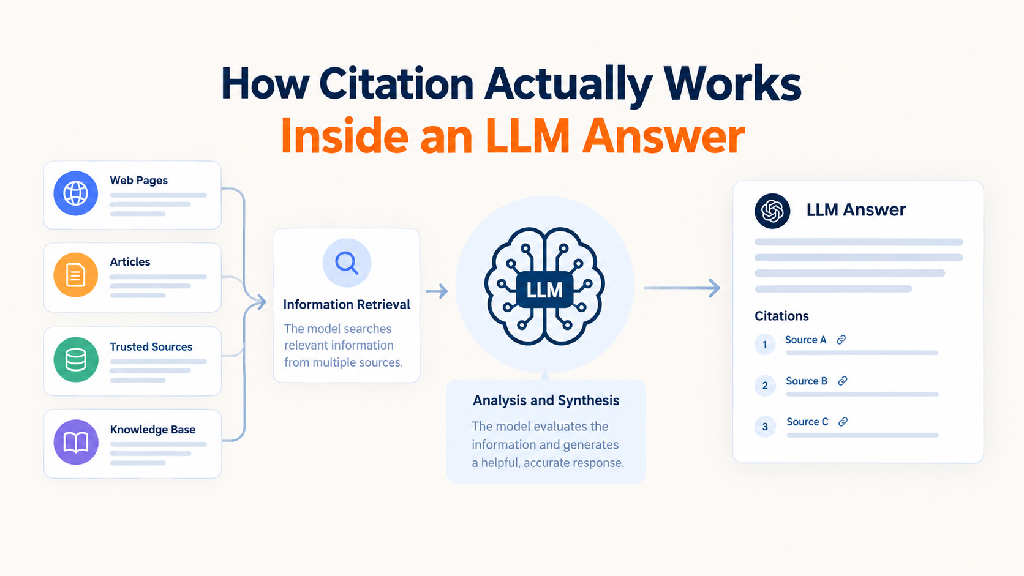
Many marketers treat AI answers like magic, but the technical process of how an LLM selects and cites a web page follows a distinct, logical workflow known as Retrieval-Augmented Generation (RAG).
The mechanics of citation occur through a multi-step pipeline:
a. Prompt Parsing and Entity Extraction: When a user submits a prompt, the system breaks down the input to identify core entities, underlying intent, and implicit context.
b. Retrieval and Semantic Chunking: The system issues behind-the-scenes search queries to index engines, pulling back top-ranking web page excerpts known as text chunks. The AI engine then scans these chunks for clear definition blocks or explicit data points that answer the query without ambiguity.
c. Synthesis and Grounding: The LLM generates its response based on these relevant chunks. Modern models enforce strict grounding rules, requiring every factual assertion to match a retrieved source chunk to minimize errors.
d. Inline Citation Insertion: As the model constructs the final text, it places a reference link directly attached to the phrase or sentence generated from that specific source chunk.
5. A Starting Checklist for AEO Success
To ensure your brand content is fully prepared for AI answer engines, implementing a proactive optimization checklist is essential for long-term digital success.
a. Implement Schema Structured Data: Add clear JSON-LD schema markup across your site, focusing on FAQPage, Article, HowTo, Product, and Organization schemas to provide explicit context to web crawlers.
b. Structure Content with Answer-First Formatting: Place a clear, direct summary answer of 40 to 60 words immediately following every major question header in your articles.
c. Adopt Conversational Heading Frameworks: Replace short topic headers with full natural questions that reflect how real users speak and prompt AI engines (Who, What, Where, Why, and How).
d. Organize Technical Data into Modular Lists: Convert complex comparison data, feature breakdowns, and processes into structured bullet points for clean machine parsing.
e. Strengthen Entity Authority and Data Trust: Include explicit author bios with credential links, cite primary research data, and ensure core business metrics are accurate and updated across external directories.
Conclusion
Answer Engine Optimization represents the next logical phase in digital discovery. As conversational AI platforms transform into primary knowledge portals, the main goal of digital publishing expands beyond capturing web clicks. Winning the future of search requires positioning your brand as the definitive source that AI models trust, extract, and cite.
By understanding the origins of AEO, adjusting your content strategy to accommodate synthesis engines, mastering the mechanics of RAG citations, and executing structured optimization checklists, your business can build lasting authority across both traditional search engines and the AI interfaces of tomorrow.